
Emotional‑Support AI Companions
The quiet revolution reshaping human connection
Artificial intelligence has been edging into our daily lives for years, but 2026 marks a turning point: emotional‑support AI companions have gone mainstream.
What began as experimental chatbots and novelty apps has evolved into a new category of digital relationship - one that blends psychology, technology, and personal wellbeing in ways we’re only beginning to understand.
Whether you see them as helpful tools, comforting presences, or a sign of society’s shifting emotional landscape, AI companions are undeniably changing how people seek support, manage stress, and navigate loneliness.
Why emotional‑support AI is booming
Several cultural and technological forces have converged to create the perfect environment for emotional‑support AI to flourish. Many people feel more digitally connected than ever yet increasingly isolated in their personal lives, and AI companions offer a low‑pressure, always‑available presence that fits neatly into this gap.
The rise of wellbeing apps and digital therapy platforms has normalised the idea of using technology to support mental health, making emotionally responsive AI feel like a natural next step. At the same time, advances in natural language interaction have made conversations with AI feel smoother, more intuitive, and less robotic.
For many users, the appeal lies in having a judgement‑free space where they can express themselves openly without fear of embarrassment or misunderstanding.
What emotional‑support AI companions actually do
Emotional‑support AI companions are designed to provide gentle, conversational support that helps people navigate everyday stress and emotional challenges. They create a space for open reflection, encouraging users to talk through their thoughts and feelings in a way that feels safe and unpressured.
Many companions guide people through simple wellbeing practices such as journaling prompts, breathing exercises, or mood check‑ins, while others help establish structure by offering reminders and small routines that bring a sense of stability to daily life. Although they are not a replacement for human relationships or professional care, they offer a comforting, consistent presence that feels accessible and tailored to the user’s emotional needs.
The concerns and ethical questions
As emotional‑support AI becomes more common, it raises important ethical questions that society is still working through. Some worry about the potential for people to become overly dependent on AI companions, using them as a substitute for building real‑world relationships. Others question the authenticity of emotional connection with a system that does not feel emotions itself, and what it means to feel understood by something fundamentally non‑human.
Privacy is another major concern, as emotional data is deeply personal and must be handled with exceptional care.
Designers and policymakers are also grappling with how to set appropriate boundaries so that AI supports users without overstepping into areas that require human judgement or professional expertise.
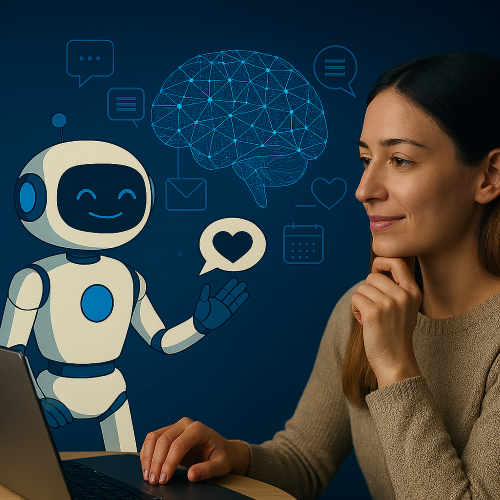
The benefits people report
Users often describe a sense of companionship that helps ease moments of loneliness or uncertainty. Many appreciate having a private space to process their thoughts, which can lead to greater emotional awareness and clarity.
Others find that the gentle structure provided by an AI companion - whether through reminders, check‑ins, or simple conversations - helps them maintain healthier routines and feel more grounded.
For most people, the value isn’t in replacing human interaction but in supplementing it with a supportive presence that is always available and never overwhelmed.
Where this trend is heading
Looking ahead, emotional‑support AI is likely to become more personalised, more integrated into everyday devices, and more transparent about its capabilities and limitations. As younger generations grow increasingly comfortable with digital companionship, social acceptance will continue to rise.
We can expect AI companions to appear in wearables, home assistants, and other tools that blend seamlessly into daily routines. At the same time, developers will face growing pressure to establish clearer ethical frameworks that protect users while still allowing the technology to evolve.
Why this matters
Emotional‑support AI isn’t just another tech trend; it’s a cultural signal that reflects how people are redefining connection, care, and comfort in a fast‑paced, often overwhelming world.
These companions highlight both the challenges of modern life and the creative ways people seek support. Whether embraced enthusiastically or approached with caution, emotional‑support AI is reshaping the emotional landscape in real time and prompting important conversations about the future of human connection.